






Signs, banners, and displays remain important tools for businesses and organizations that want to communicate messages clearly in physical spaces. From storefront promotions and corporate events to exhibitions and community gatherings, professionally produced printing services can transform creative concepts into visible brand experiences. Strong visuals, readable messaging, durable materials, and consistent branding allow physical displays to support awareness while creating a polished environment for customers, visitors, and event attendees.
What’s Covered
- Why Do Signs Remain Important for Modern Businesses?
- How Do Banners Increase Brand Visibility?
- What Makes an Effective Display Design?
- How Can Businesses Use Statistics to Improve Display Marketing?
- Which Businesses Can Benefit From Printed Signs?
- How Do Displays Support Trade Shows and Exhibitions?
- Why Is Material Selection Important for Signs and Banners?
- How Can Signs Improve Customer Navigation?
- What Role Does Color Play in Display Visibility?
- How Can Businesses Maintain Brand Consistency Across Displays?
- Why Does Print Quality Matter for Large Displays?
- How Can Displays Support Seasonal Campaigns?
- Conclusion
Why Do Signs Remain Important for Modern Businesses?
Signs provide immediate visual communication in places where customers make decisions, enter facilities, attend events, or explore retail environments. A well-designed sign can identify a business, highlight a service, share an announcement, or guide visitors toward a specific location.
Unlike temporary digital messages, physical signs remain visible within a chosen environment for as long as they are displayed. This makes them useful for storefronts, offices, reception areas, exhibitions, schools, community facilities, and promotional venues.
How Do Banners Increase Brand Visibility?
Banners offer a large-format solution for communicating messages from a distance. Their size allows important headlines, logos, imagery, promotional details, and event information to remain visible across busy environments.
Businesses can use banners for grand openings, seasonal campaigns, product launches, trade events, conferences, and special promotions. Organizations can also customize banners to match specific themes, colors, and messaging requirements.
Because banners can be positioned in prominent areas, they can help create a strong visual presence while supporting a consistent campaign identity.
What Makes an Effective Display Design?
An effective display balances visual appeal with clear communication. Large headlines, strong contrast, appropriate imagery, and organized layouts can help audiences understand the message quickly.
Professional design also considers viewing distance. A display intended for a large exhibition hall may require different typography and image proportions than a sign positioned near a reception desk.
Keeping the main message concise can make displays easier to understand while allowing supporting information to complement the central idea.
How Can Businesses Use Statistics to Improve Display Marketing?
Marketing statistics can provide useful insight into visibility, audience behavior, and campaign engagement. Businesses often evaluate promotional displays using measures such as foot traffic, inquiries, campaign responses, sales activity, or event participation.
These measurements can help organizations understand how physical advertising contributes to broader marketing objectives. For example, a business may compare customer activity during a promotional period with previous periods to identify useful patterns.
Statistics can therefore support more informed decisions about display placement, messaging, design, and campaign timing.
Which Businesses Can Benefit From Printed Signs?
Almost every industry can use signs and displays to improve communication. Retail stores can highlight promotions and product categories, while professional offices can use signs for reception areas and visitor guidance.
Restaurants can use menu boards and promotional displays. Educational institutions can communicate schedules and events. Healthcare facilities can provide clear directional information. Corporate organizations can use branded displays for meetings, conferences, and presentations.
The flexibility of printed signage allows businesses to adapt physical communication to their specific environments.
How Do Displays Support Trade Shows and Exhibitions?
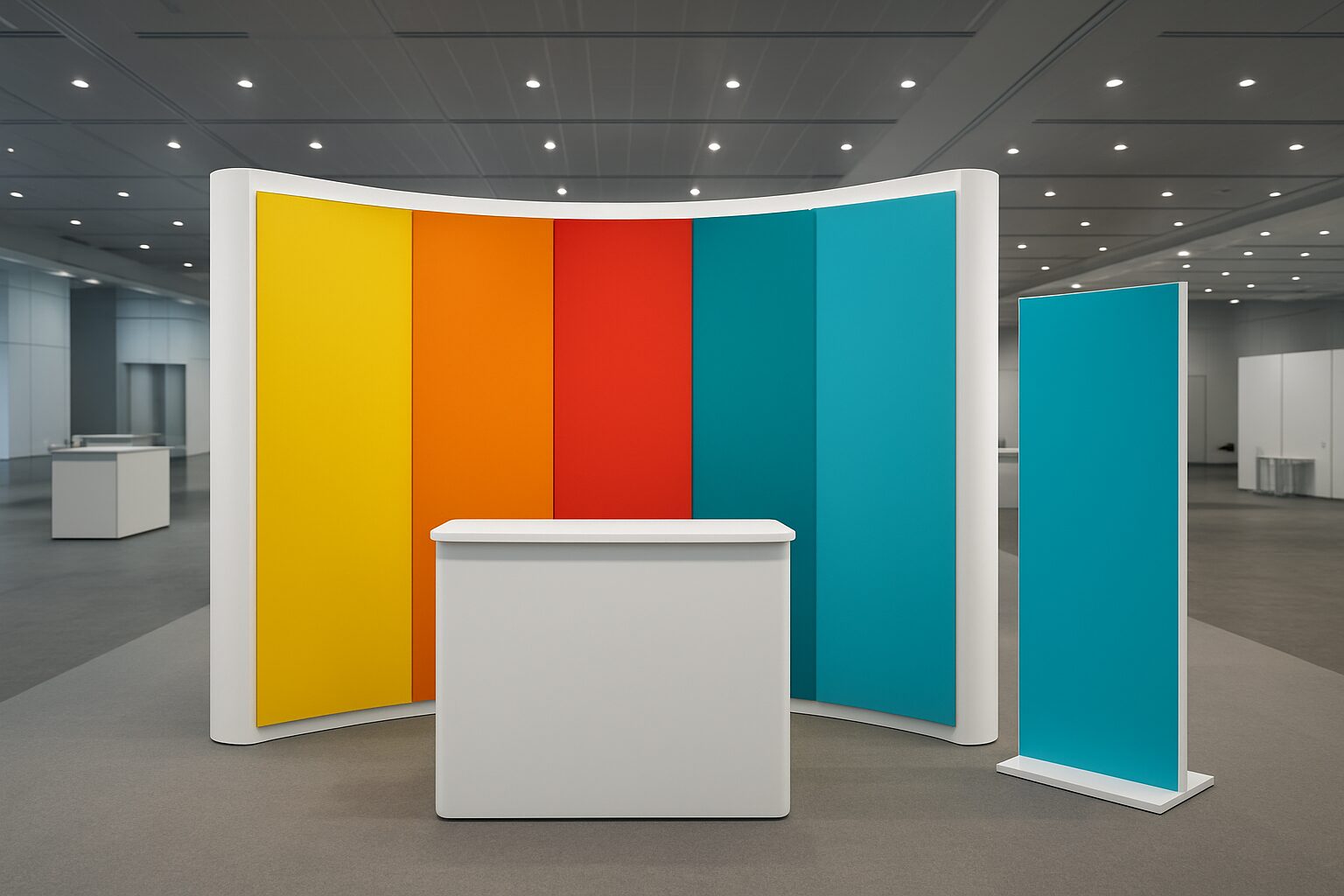
Exhibitions depend heavily on visual presentation because multiple organizations may be communicating within the same venue. Branded backdrops, retractable displays, banners, posters, and informational graphics can help create a recognizable exhibition space.
A coordinated display can communicate a company’s identity before a representative begins a conversation. Product information, key services, brand messages, and promotional highlights can be arranged to make the booth environment informative and welcoming.
Consistent colors and imagery across the display area can further strengthen the overall presentation.
Why Is Material Selection Important for Signs and Banners?
Different environments require different materials. Indoor displays may prioritize lightweight construction and visual finish, while outdoor applications often require materials designed to withstand changing conditions.
Material selection should consider location, display duration, installation method, expected handling, and desired appearance. Choosing the right material can support both durability and presentation quality.
This flexibility allows businesses to create displays suited to temporary campaigns as well as longer-term applications.
How Can Signs Improve Customer Navigation?
Directional signage can make physical environments easier to understand. Customers and visitors can quickly identify entrances, departments, reception areas, meeting rooms, restrooms, service points, and event locations.
Clear directional signs can contribute to a smoother visitor experience by reducing confusion and helping people move confidently through a space.
For larger events, a coordinated signage system can combine directional information with schedules, welcome messages, and branded visual elements.
What Role Does Color Play in Display Visibility?
Color influences how quickly a display attracts attention and how effectively it communicates information. Brand colors can strengthen recognition, while contrasting colors can help important text stand out from the background.
A professional design uses color strategically rather than adding unnecessary visual elements. Balanced color combinations can make signs more attractive while maintaining readability.
Consistent color choices across banners, posters, and other displays can also create a unified campaign appearance.
How Can Businesses Maintain Brand Consistency Across Displays?
Brand consistency can be achieved by applying the same logo treatment, typography, color palette, imagery style, and messaging approach across different display products.
For example, a promotional campaign may use a storefront sign, event banner, counter display, and promotional poster. When all materials share recognizable design elements, customers can connect them as part of the same campaign.
This unified presentation can strengthen the professional appearance of a business and make marketing activities easier to recognize.
Why Does Print Quality Matter for Large Displays?
Large-format materials make visual imperfections more noticeable, so production quality is especially important. Sharp graphics, accurate colors, clean edges, and suitable finishing can contribute to a polished final result.
High-quality production also helps ensure that text remains clear and images retain their intended appearance. For businesses using displays as part of customer-facing marketing, this attention to detail can complement the quality of the brand itself.
How Can Displays Support Seasonal Campaigns?
Seasonal displays provide an opportunity to refresh physical marketing throughout the year. Businesses can create materials for holidays, sales periods, new product announcements, community events, annual celebrations, and special promotions.
Updating displays regularly can keep physical environments visually interesting while giving customers timely information. Seasonal designs can also be coordinated with digital campaigns for a consistent promotional experience.
Conclusion
Signs, banners, and displays offer versatile ways for modern businesses and organizations to communicate in physical environments. Their ability to combine prominent visuals, concise messaging, branding, and useful information makes them valuable for storefronts, exhibitions, events, offices, and promotional campaigns. With thoughtful design, suitable materials, accurate production, and strategic placement, printed displays can create attractive spaces while supporting brand awareness and customer communication. By combining physical visibility with broader marketing strategies, organizations can make every display an effective part of their professional presence.